02 Imbolc
Raindrops & Snowdrops
Slow work / Embodying landscapes / Acts of Care
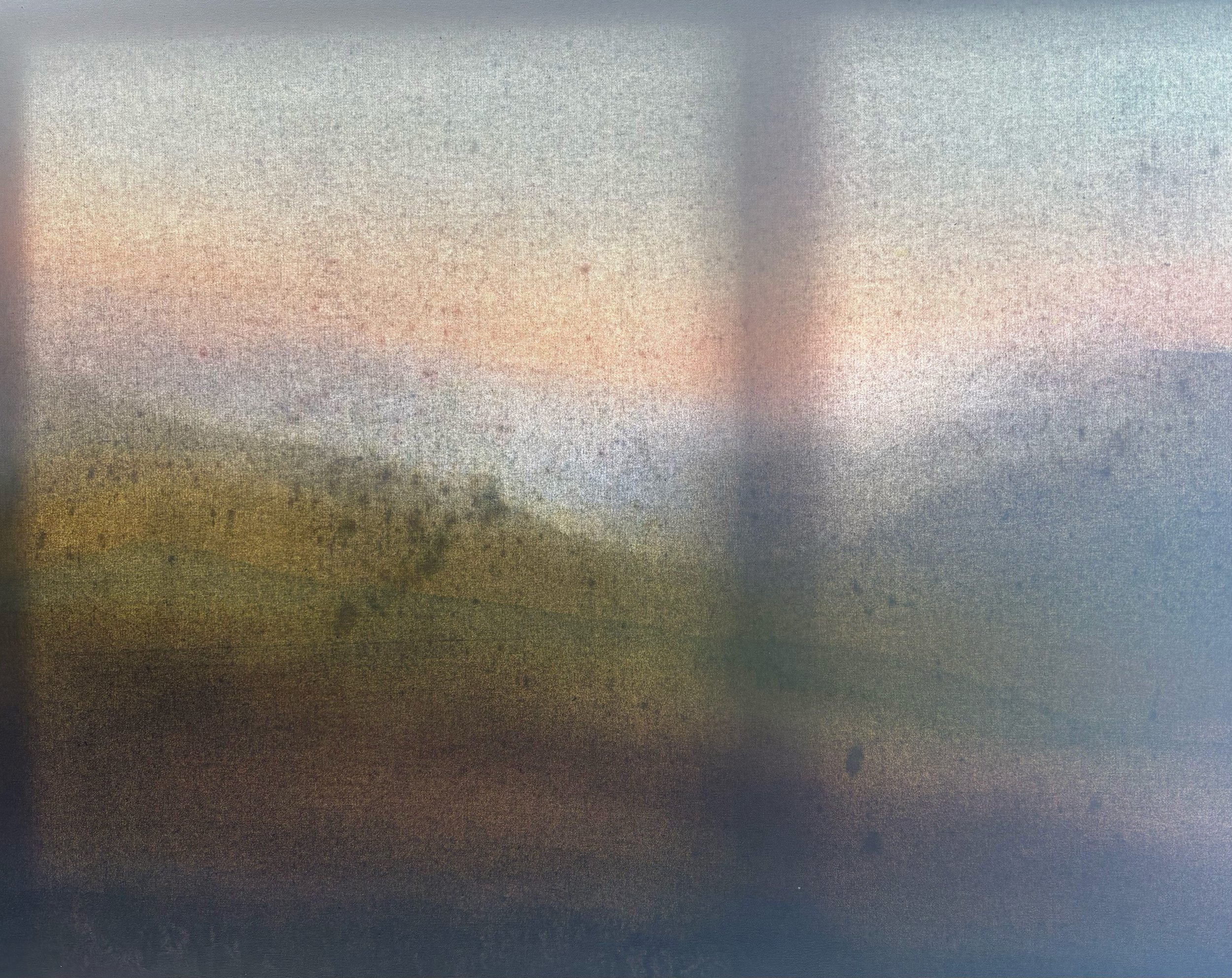
A warm and cosy welcome to my second newsletter, IMBOLC
Since sending out my last newsletter, a lot has happened. At the beginning of January, I returned to lecturing three days a week in NCAD, and life has been pretty hectic ever since. It took a full month for my brain to reprogram and start thinking “academically” again. I’m not even sure it has fully reprogrammed, because I definitely feel and think differently than I did before maternity leave.
At the moment, I have one full day in the studio every week, and by god, I have been squeezing every bit out of it. The other three days, I try to grab an hour here and there during nap times, finishing bits, tidying up, or cleaning the creative chaos I have left behind. This new working-parent life is a real juggle, and sometimes a struggle, but I’m embracing it.
It has made me appreciate time in a way I never did before, especially the time I have with Elle, our little girl. I honestly have no idea what I did with all my time before I had a baby. I remember my friend Ria telling me that her concept of time changed completely when she had her daughter. She said I would surprise myself with how much I could get done in just a few focused hours in the studio, how efficient I would become. I listened at the time, but I only fully understand what she meant now, as I sit here with a few precious hours to finish writing this newsletter before tackling the long list of to do’s. The juggle is real.
All that being said, for the first time in over two years, I feel like I’m finding my flow again in the studio and I’m really excited about the work that’s beginning to unfold.
This newsletter is about shifting landscapes, embracing change, going with the flow, working slowly, and acts of care. I hope you enjoy it and as always, thank you for taking the time to read.
Aoife x
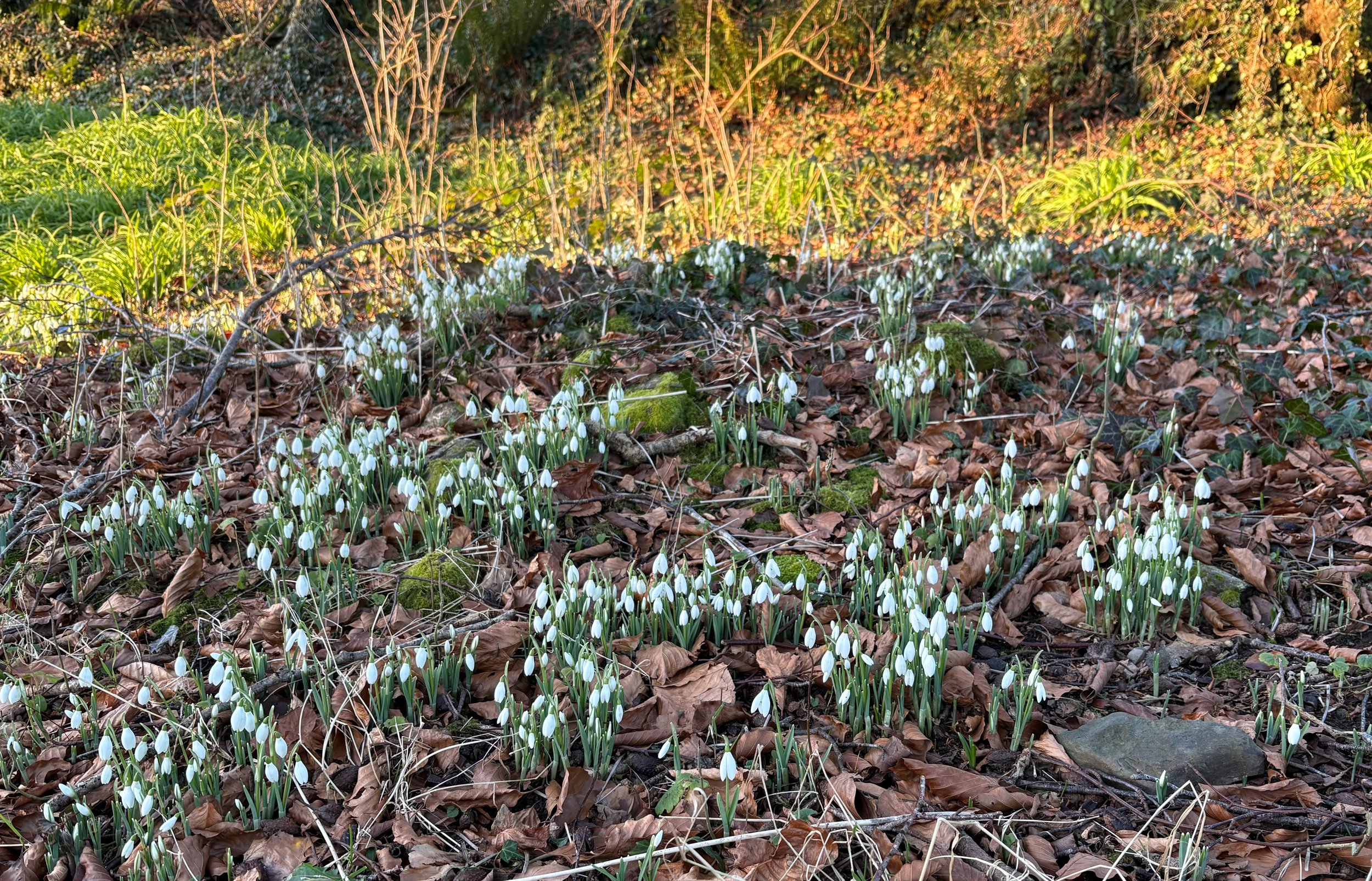
Imbolc & Brigid
I couldn’t begin this newsletter without mentioning Imbolc and Brigid.
I have always known about the Celtic festivals, Imbolc, Bealtaine, Lughnasa and Samhain, but it is only since moving to Wicklow a few years ago that I have truly embraced and understood their importance in grounding us, connecting us to nature, and marking the rhythm of the seasons throughout the year.
The word Imbolc comes from the old Irish word i mbolg, meaning “in the belly”, a reference to the seeds of Spring beginning to stir in the belly of Mother Earth, and to the sheep beginning to lactate. It is a time when the land itself starts to shift and reawaken after the long, harsh winter. I love this time of year, as it marks the end of January, often a difficult, dark, and heavy month. Imbolc gently signals that it’s time for us, too, to come out of hibernation: to pull on our wellies and step outside to notice the subtle changes in the landscape. For me, spotting the first snowdrops pushing up through the soil is always a small but magical moment.
This year, Imbolc fell on February 1st, the same day as Brigid’s Day. In early Celtic tradition, Imbolc honoured Brigid, the goddess of creativity, healing, fertility and smithcraft. Because of her deep association with fertility and the natural world, Brigid feels to me like a guiding figure for ecological awareness. She represents our dependence on the earth and our interconnectedness with all living things. I see her as an embodiment of the landscape itself, and I was delighted when her feast day became a national holiday, a meaningful recognition of the feminine within Irish society and of our enduring connection to the natural world.
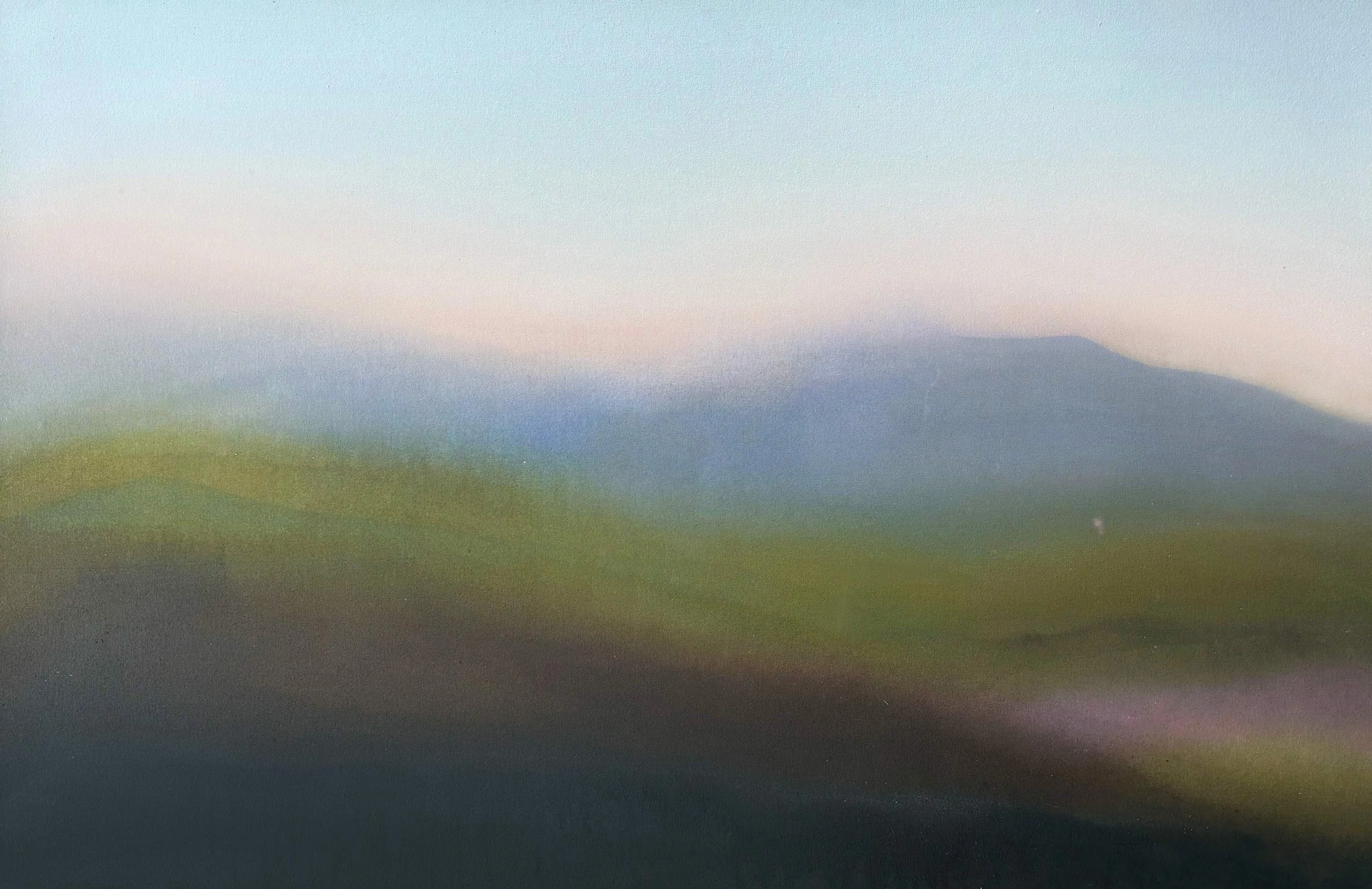
Ancestral Landscape, 2026
Acrylic, pastel on canvas, 100 × 65cm
Slow Work
In my own practice, I feel that the making has slowed down while the research and thinking have gathered momentum. With so much change in my life, I no longer have the continuous stretches of studio time I once did. The way I make work has had to shift. Now, I dip in and out of the studio and my notebooks for a few hours here, half an hour there.
Surprisingly, this slower pace is working well for me. I still yearn for more time, of course, but deep down I know that too much time can sometimes work against me. If I linger too long, I tend to overwork things, endlessly “fixing” them. In the past, with deadlines looming, I often left work until the pressure built up because I believed that was when I worked best when the creative energy felt urgent and alive. I would spend long, intense hours in the studio to meet those deadlines, but I often ended up exhausted, anxious and burnt out.
That way of working left little space for the work to sit, for reflection, distance, or return. I was on a constant go, go, go trajectory. Looking back, that pace was costly, to my health, to the people around me, and ultimately to the work itself. The work usually got finished, but I can see now that it might have been stronger had the process allowed more breathing room.
With this new rhythm, I feel calmer and more focused in the studio. The work is more enjoyable. Time is precious, but the pauses within it feel essential.
Last month, I attended a talk by the Irish artist John Beattie, who spoke about his deliberately slow-paced practice. He described how he had to adjust his way of working to fit his life, allowing his processes to stretch out and his ideas to evolve over longer periods. That slower rhythm created space for reflection, contemplation and careful editing and, from what I could see, resulted in incredibly sophisticated and refined bodies of work.
It made me realise that this slower way of working might actually be to my advantage. At the moment, I don’t have a solo exhibition planned, which feels a little unsettling, it’s been two years since my last one. But for the first time, I don’t want to rush into the next thing. I want to have a fully or almost fully resolved body of work ready before I plan another exhibition. I have raced and rushed through much of my life. I don’t want to do that anymore.
So here’s to taking our time. To pausing. To sitting with things. To making slow work.
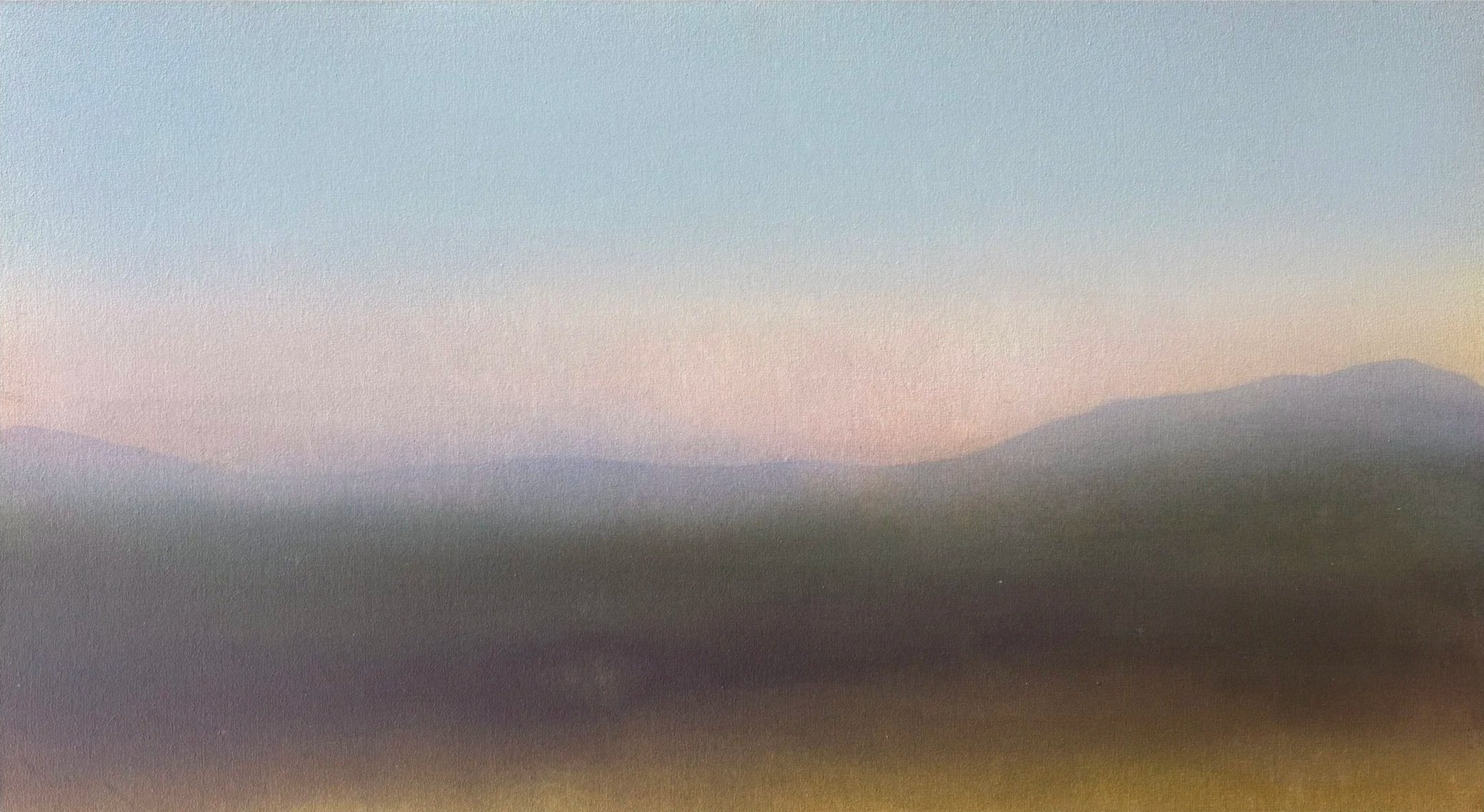
Tread Softly on my Dreams, 2026
Acrylic on canvas, 90 x 50cm
Embodying Landscapes
Working with the landscape, rather than simply depicting it, requires a shift in mindset. It means slowing down, listening differently, and entering into a relationship that is not extractive but interactive.
My paintings are not made from photographs, nor do I bring canvases out to paint directly from observation. They emerge from long periods spent traversing and exploring the landscape around me. When I am in the mountains or on forest trails, running, jogging, walking, I absorb the colours, the feel of the air on my skin, the smells and the atmosphere. Through osmosis, it settles somewhere inside me. The work that emerges is not about representing a specific mountain or place. It’s about the embodied experience of many natural spaces.
When I paint, I try to step away from overthinking the mark. I work on the floor on large canvases, and the process is physical. I stretch and extend my body to place paint on the surface, almost mimicking the movements of crossing land itself. When I let the processes guide me and stop thinking about what the work should look like, that’s when the magic happens. A few weeks ago a colleague of mine, Taffina, told me that when she paints, she is constantly trying to get away from herself. It made me laugh, but it stayed with me the whole drive home. I think, in a way, I am also trying to get away from myself too, from overthinking, fixing and perfecting.
I recently made a group of paintings for an open submission. The last one I finished was by far the strongest. It was made alongside the others but materialised without overthinking. I had no plan for it. I worked intuitively, only adding paint when I felt fully in flow and I let the process lead the way. I worried about the others; I enjoyed this one. To me, it felt like I was on the right path, creating work that carried the emotional vibration of lived landscapes
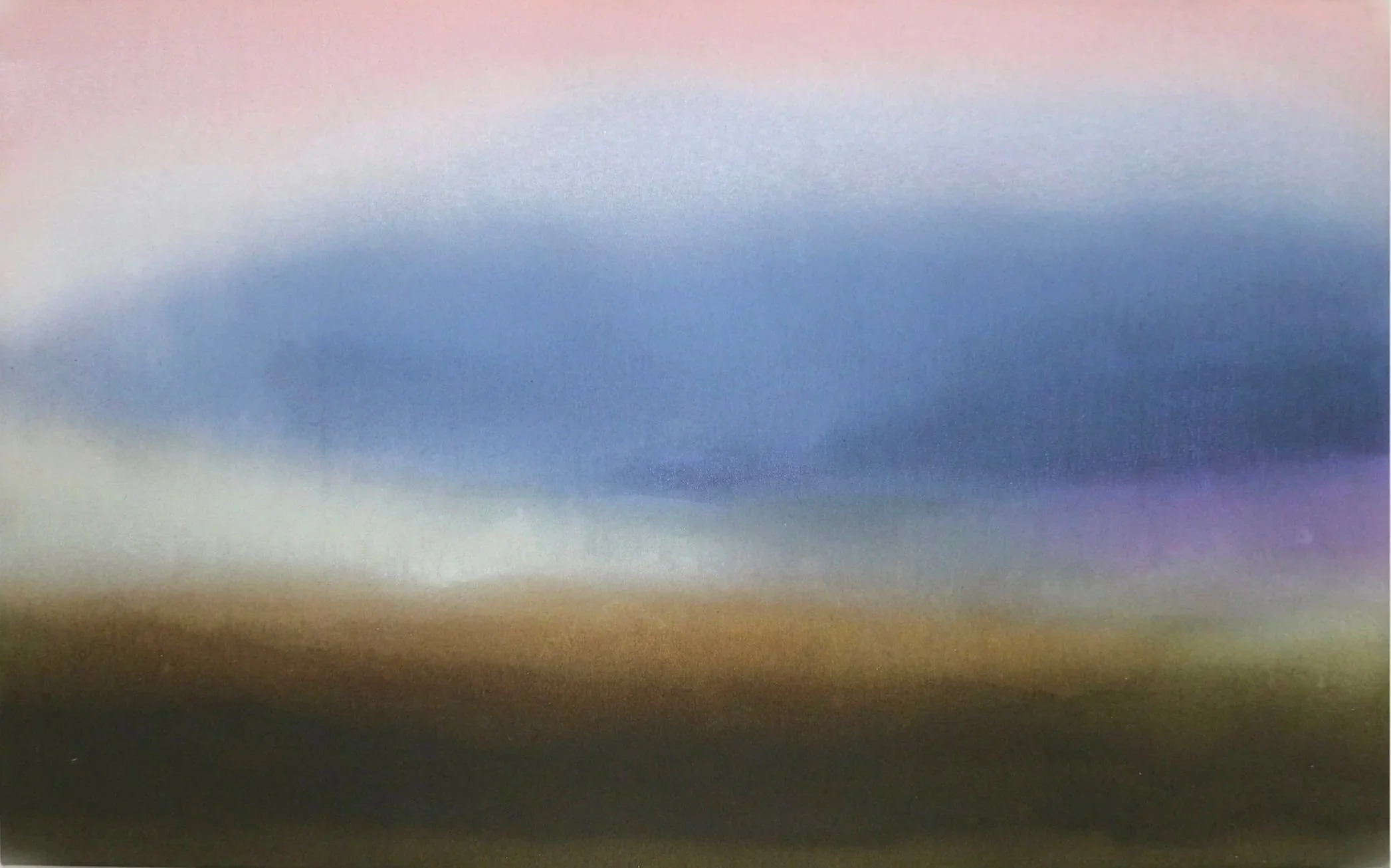
Searching for Openings, 2026
Acrylic and pastel on canvas, 80cm x 50cm
Acts of Care
Yet perhaps the most vital act of care is the care we offer to the land. Without that care and respect, all other acts of caring begin to lose their meaning.
So what does it mean to care for the land? Is it recycling more? Letting your garden grow wild? Choosing not to board a plane to escape the wet, miserable weather? Through both my art practice and my life, I have come to believe that the deepest form of care begins with understanding. When you truly understand how the natural world works, you instinctively want to protect it.
In my thirty-four years on this planet, it is only in the last two that I have felt genuinely in tune with the seasons. I have begun to embrace each shift with a sense of anticipation, to appreciate winter’s quiet darkness, and to notice the dry (ish) air of summer gradually turning damp as leaves fall and feed the soil for spring’s seedlings. There is comfort in recognising these cycles, in seeing how nothing is wasted and everything returns.
When I consider how to embed care within my practice, I am drawn to processes that demand slowness and attention. As a printmaker, I work within a medium that requires patience and precision; printmaking insists on care. As a painter, my marks may be quick and expressive in the moment, but the work itself unfolds gradually. Each layer must dry before the next is applied. As in printmaking, I build translucent layers one upon another, searching for light, depth, and something quietly magical in the spaces between.
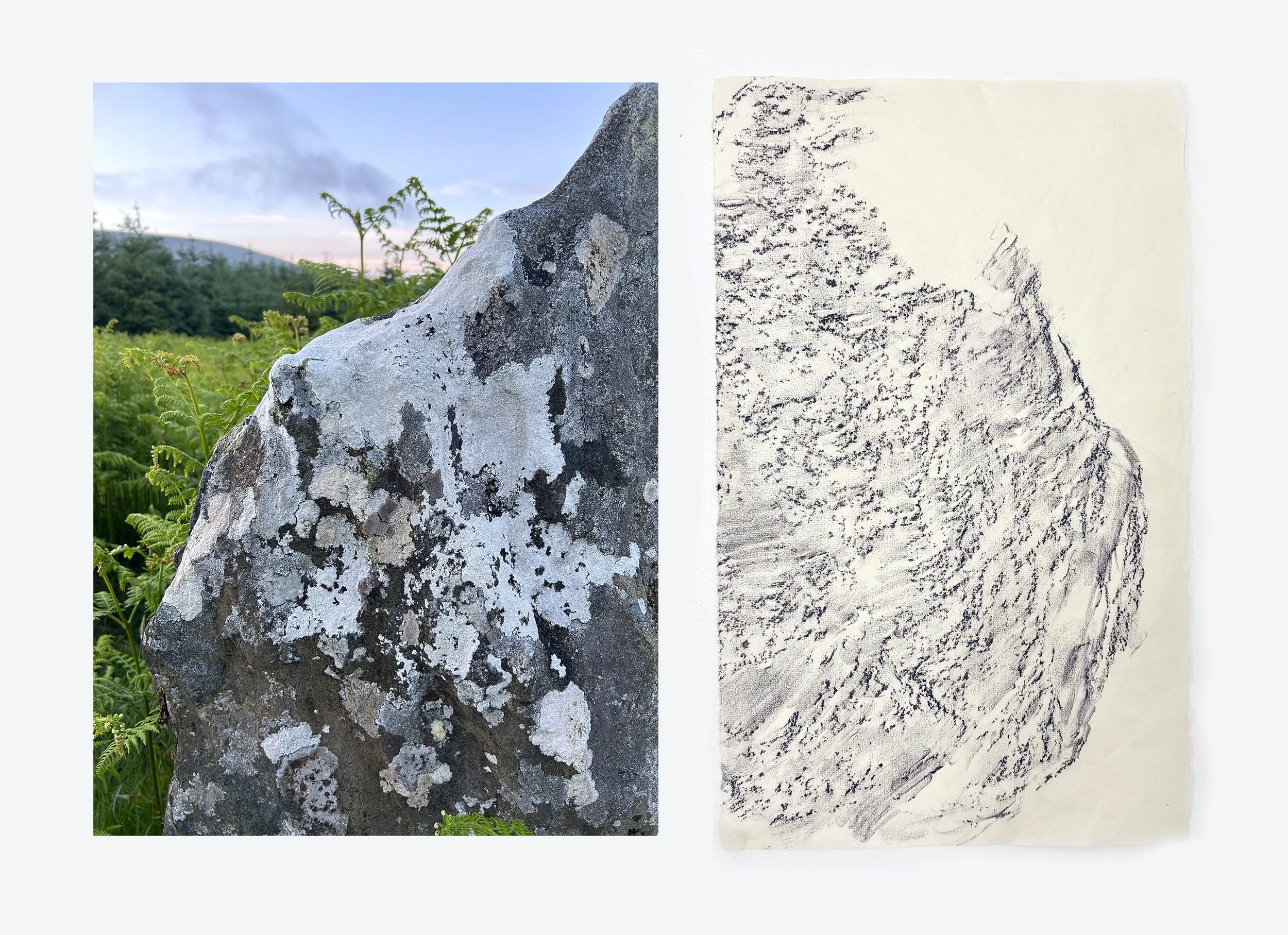
Recently, I have been working with rubbings, prompted in part by the presence of a Neolithic stone circle in the forest behind my home. I have been researching it for some time, searching for a way to respond to it through my work. Once composed of twenty stones, the circle now holds only eleven. I find myself thinking about the nine that are missing, and about the Neolithic people who lifted and positioned these immense weights with such precision that they align with the summer solstice. They were people deeply connected to the land, people who understood it intimately, depended upon it, and cared for it.
In an attempt to absorb some fragment of that knowledge and wisdom, I began making studies of the stones through rubbings. When we were children, my parents used to “bánaí” us if we were tired, upset, unwell, or simply in need of comfort. It was a soft, repeated gesture, a gentle stroke beginning at the forehead and moving to the crown of the head, again and again, and it instantly made us feel calm, safe, and understood. (Pronounced - boweney, bánaí is an old Irish word used in the Gaeltacht area of Gaoth Dobhair in Co. Donegal)
Laying delicate Japanese paper against the stones and slowly rubbing graphite across its surface to reveal their ancient textures feels, in some ways, like those “bánaí” gestures. It is a quiet caress. These stones have stood for over four thousand years and have witnessed immense change in the landscape around them. Through this process, I want to communicate that I care, while also absorbing something of their endurance and wisdom, bringing myself closer to the earth, toward a deeper understanding of it, and, ultimately, toward caring for it more deeply.
You will have to wait until the next newsletter to see these works on paper as I don’t want to give too much away yet. But here are a few pages from my notebook.
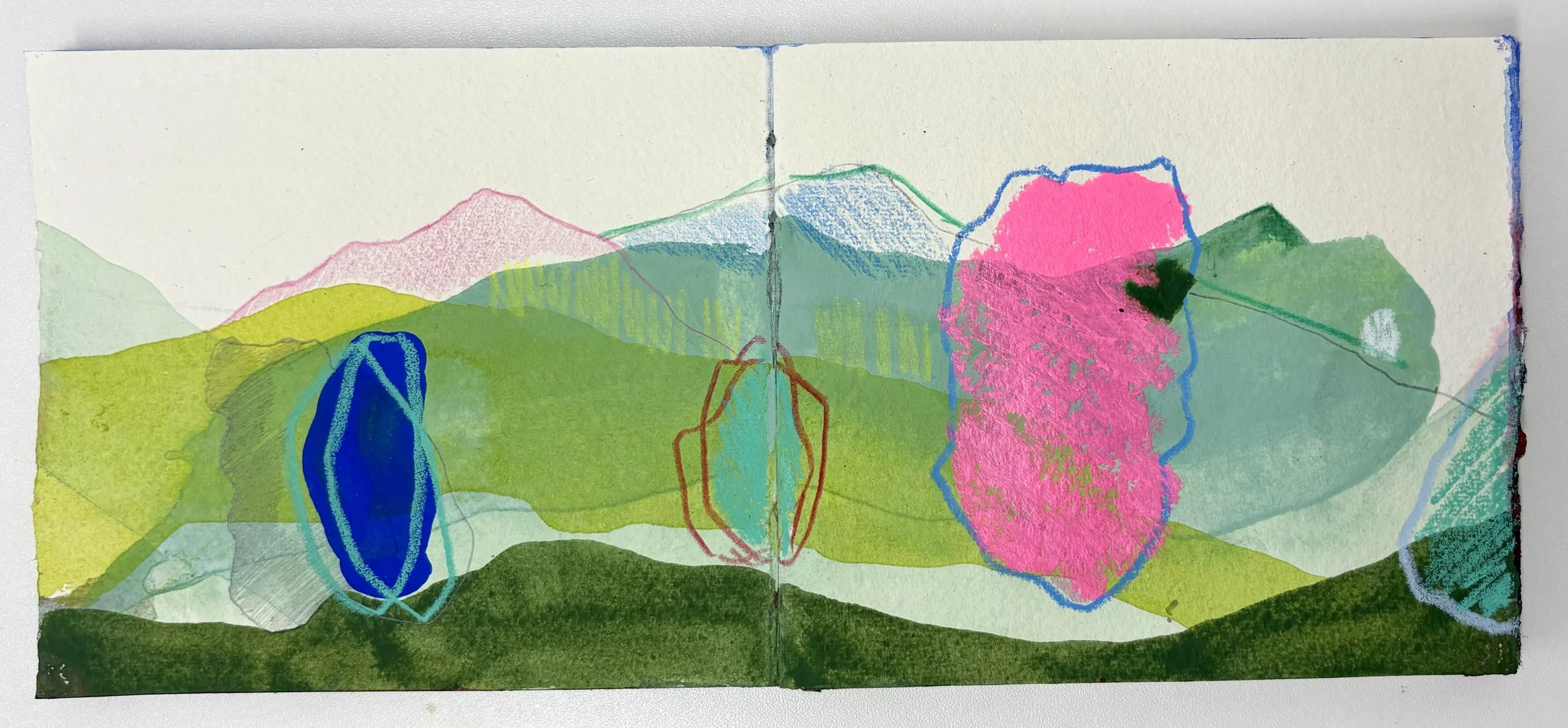
Thank you for taking the time to read this newsletter. I hope you enjoyed it and I look forward to seeing you all back here for my next one during Bealtaine in May 2026.
with love,
Aoife x
