03 Bealtaine
A time to step outside
Full Circles / Using our senses / Thin Places/ Riddlers
Hello friends,
Thank you for arriving back here and sharing this virtual space with me and my thoughts for this next newsletter - Bealtaine. Make yourself a cup of tea, it’s a long one (approx a 10min read).
Before I dive in, I feel it is only right to begin by mentioning how sad I felt last week after hearing of the passing of one of my favourite artists of all time — David Hockney.I let out a heavy sigh when I heard the news and realised that Hockney’s hand had finally stopped making and his final works were done. I knew this day would come soon, as he had lived a long and art-filled life, but nonetheless, it is still very sad to lose such a legend of the art world.
His work has brought me so much joy and constant inspiration throughout my journey to becoming the artist I am today. His eye for colour, his incredible line work in his prints and drawings, and the way he looked so closely at the simple things in life and expressed them in the most extraordinary way were all things of great beauty.
He leaves the world with the gift of his life’s work — an incredible legacy that continues to bring so much joy to so many. David once said that Picasso was his hero, and I think I have to say that David was definitely one of mine.
Below are a few of my favourite of his etchings. Although I loved his paintings and digital works, I think his prints were definitely the cream of the crop for me. I especially loved his Blue Guitar series where he took inspiration from Picasso’s The Old Guitarist and also Wallace Stevens’ poem The Man with the Blue Guitar.
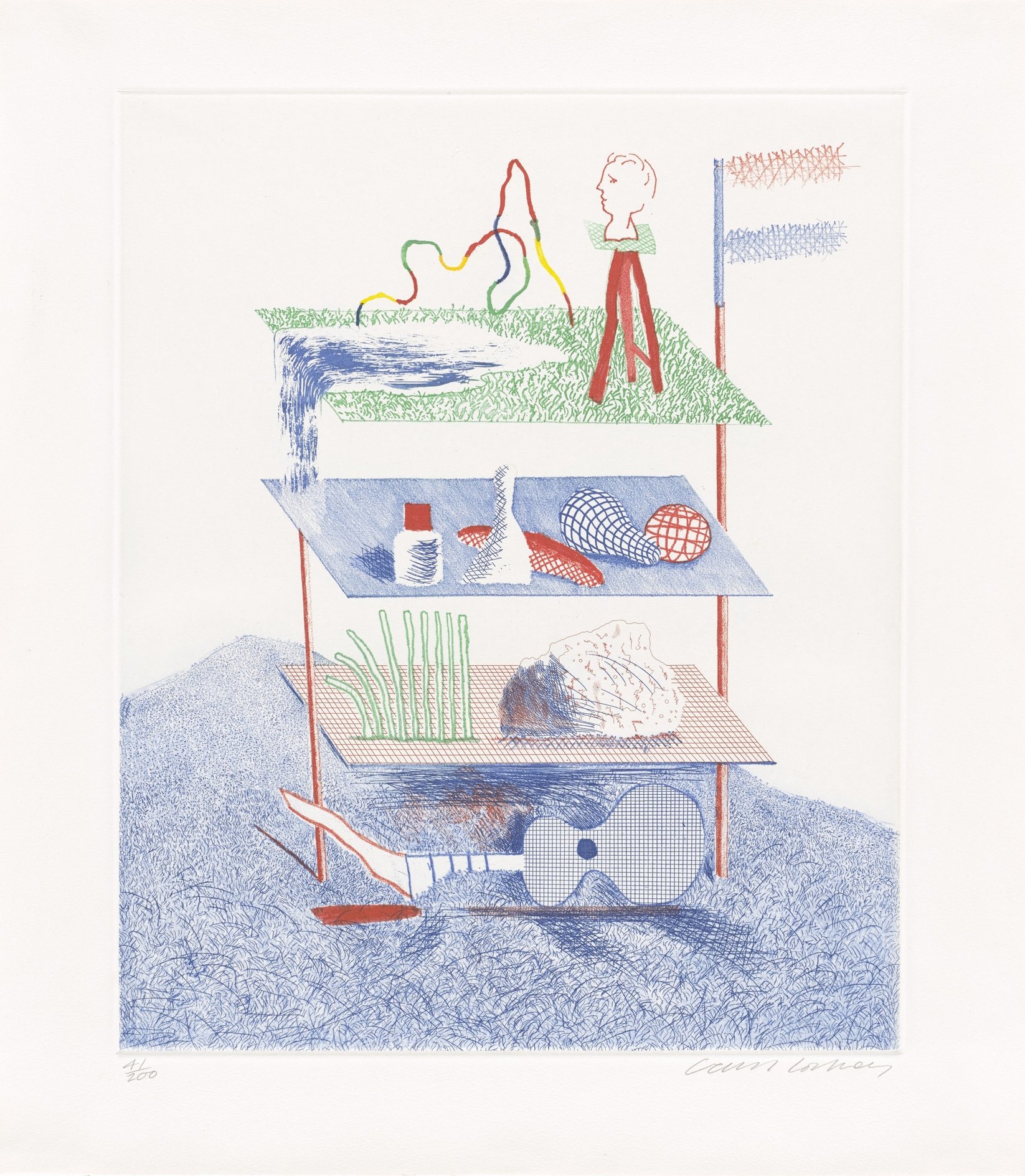
The Blue Guitar, 1976- Softground etching with aquatint
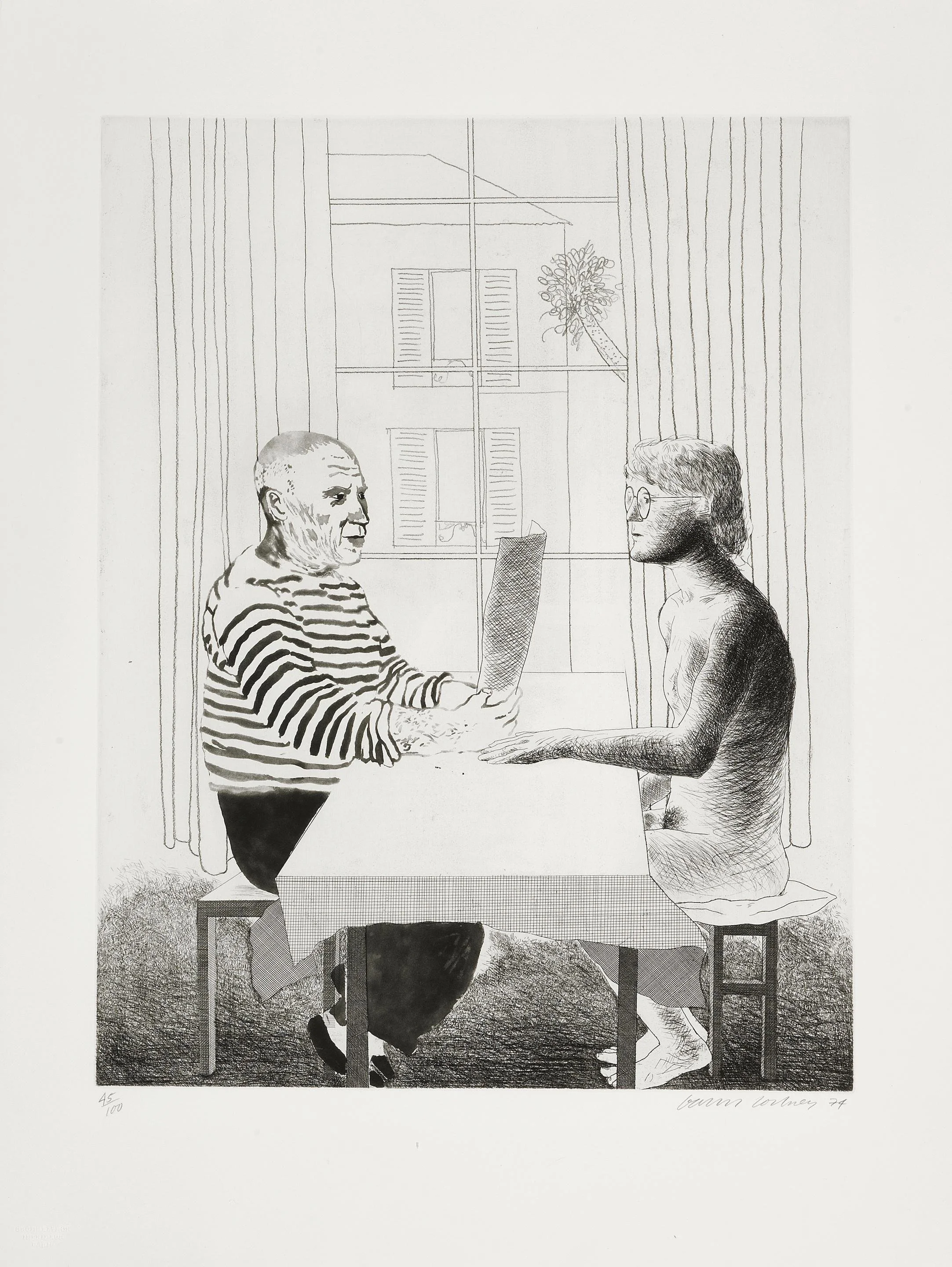
Artist and Model, 1973 - Hardground etching with aquatint
Seeing as in the last two newsletters I introduced each Celtic season, I better do the same with this one. Bealtaine is the third of the four Celtic seasons, marking the beginning of summer, and falling halfway between the Spring Equinox and the Summer Solstice on May 1st. Traditionally, it was a time when cattle were driven out to summer pastures and life moved outdoors again after the darker months.
Fire played an important role in the rituals of Bealtaine, used symbolically for protection and transition. There was a sense that this was a threshold time, when the boundary between the human and the otherworld felt thinner, and the Aos Sí (fairys and spirits) were thought to be especially active.
The Summer Solstice, the longest day of the year, sits between Bealtaine and Lughnasadh, and is a celebration of light, fertility, and abundance. Although it is a day of celebration, I always feel a pang of sadness, as from this day onwards the days gradually begin to get shorter and darker until we reach the 21st of December.
This year, the Summer Solstice was spent celebrating with friends while camping on a beautiful beach in Wicklow. We swam in the sea, explored rock pools, built sandcastles, sat around the fire sharing stories, ate sandy food, and watched the mesmerising oystercatchers fly overhead, leaving us with their beautiful song. It was pure bliss.
On our way home, my husband and I promised each other that we would make more time for trips like these. There is something about being outdoors, away from work and the constant pull of the online world, that allows us to fully return to the present moment. No one seemed to know what time it was; everyone was simply there — feet in the sand, the sea breeze on our faces, and completely connected to the place around us.
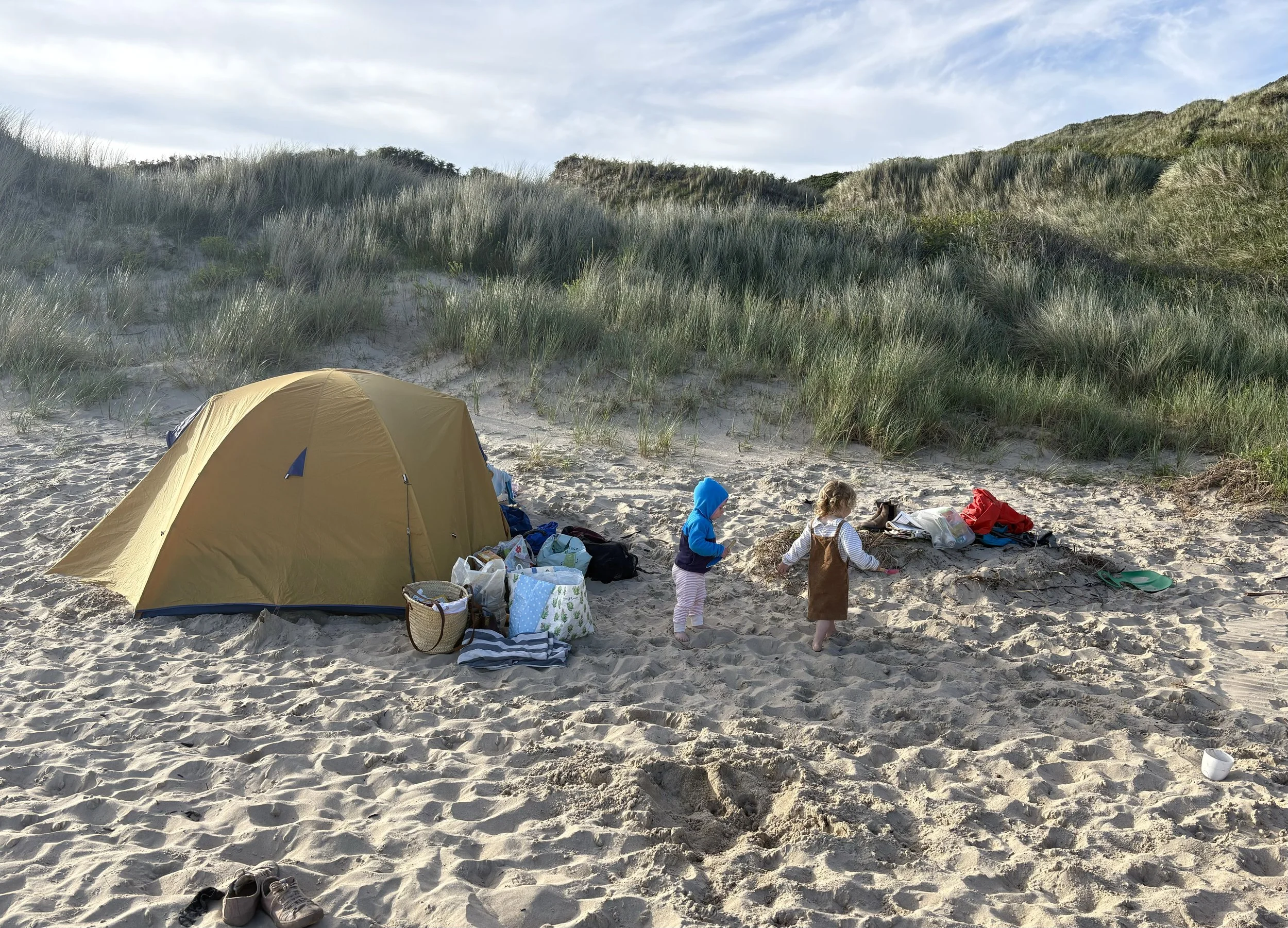
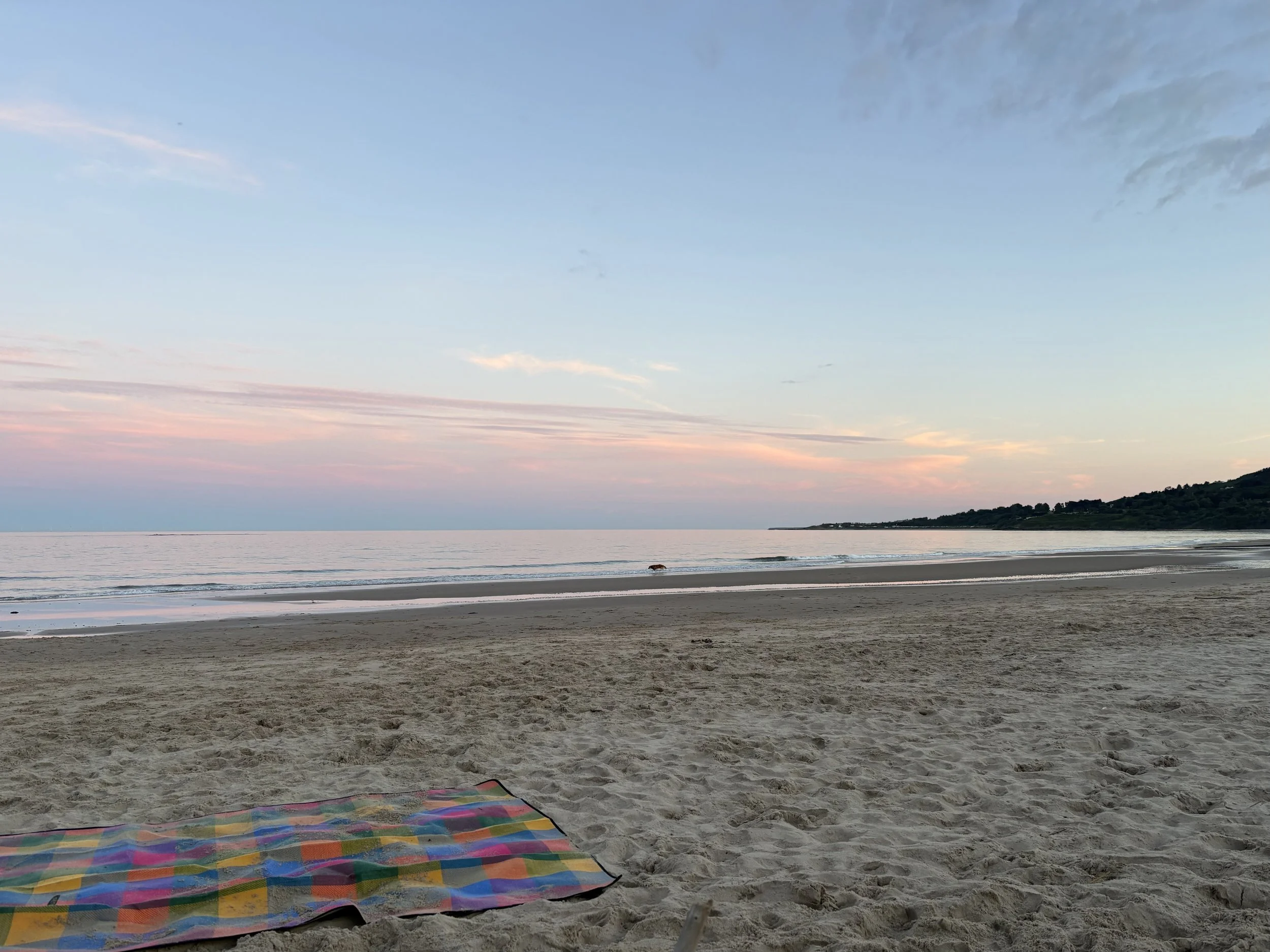
Summer Solstice 2026
Full Circle
For those of you who are new here, I thought I would share a little insight into my practice. And for those who have followed my work for some time, you may not actually know the journey that brought me to where I am in my practice today. So here you go…
I grew up by the sea and spent a huge amount of time in or around the water. As a child, I always preferred being outside rather than indoors — I had plenty of energy to burn!! Instead of building armies on a screen, I was building fairy villages and tiny houses from found natural materials. I spent summers in Donegal and West Cork, with salty skin and sandy feet. I went camping with friends and family and always loved a big adventure. So, it is perhaps no surprise that I crave the outdoors and feel the need to move my body through the sea or the mountains in order to feel grounded, connected, and alive.
For a long time, I struggled to understand what I wanted my work to be about, and why I felt compelled to make it. The act of making was never the challenge — I was always technically skilled and comfortable enough with materials — but I often questioned the value of what I was creating. I really felt that I wasn’t a “conceptual artist”, and worried that the work I wanted to make was too simple, too obvious, or not interesting enough. I found it difficult to articulate my ideas and to write about my work. I think, in some ways, I still do. It definitely isn’t second nature that’s for sure.
When I look back at the work I have created over the past 13 years, it is varied and constantly evolving, but there is one thread that runs through it all: a deep sense of place.
I have always been trying to find my way — my path — and to understand what makes me feel that I am exactly where I am meant to be. I have always been drawn to where I come from and have loved investigating what the people who came before me left behind. I found great joy exploring derelict houses in rural Ireland, imagining the lives of the people who once inhabited them. I struggled with the idea that people, places, and stories could simply disappear or be forgotten. So, in response, I began making work that sought to honour and preserve those memories through print.
Eventually, that body of work ran its course, and I needed a change. I applied to an MFA in the Royal College of Art in London, knowing that my practice needed a shaking up. I wanted to learn, grow, and push myself further, conceptually and practically. However, when I arrived, I found myself feeling strangely disconnected. The sense of place and inspiration that had always guided me was across the water, back in Ireland.
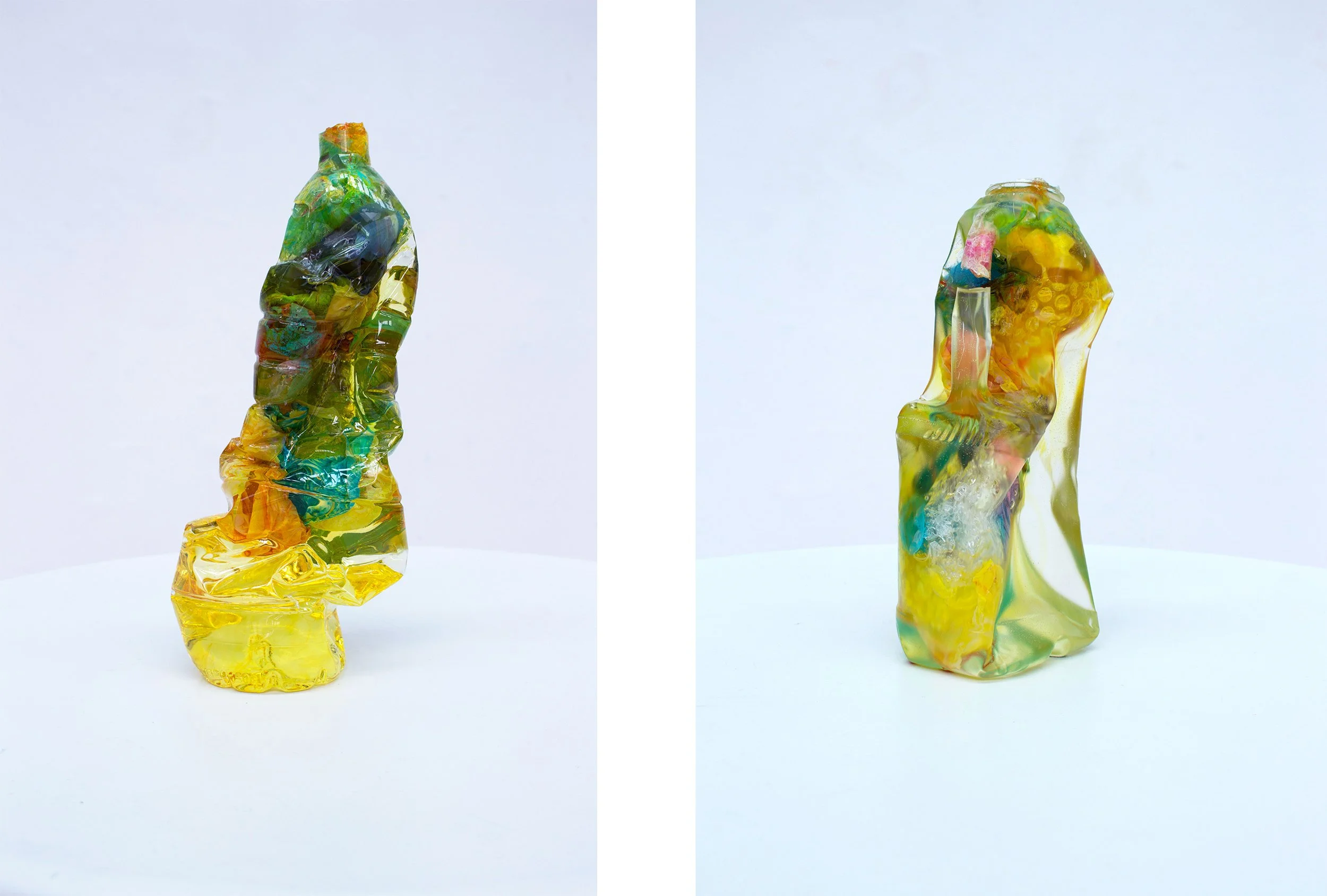
Living in a large alien city felt claustrophobic, and I found myself craving the natural world. It was only after leaving Ireland that I fully realised how much I relied on nature and how deeply connected I was to it. This realisation created an urge to protect it. Continuing with my interest in remnants and what we leave behind, I began looking at the traces we leave that impact the natural world — particularly plastic pollution. Sea plastic became the focus of my work. Looking back now, I realise that my focus on ocean plastic, rather than simply the discarded materials around me in the city, was also connected to how much I missed the sea. I had a brilliant two years in London and was really proud of the work I made whilst there, but I knew I needed to return to the homeland.
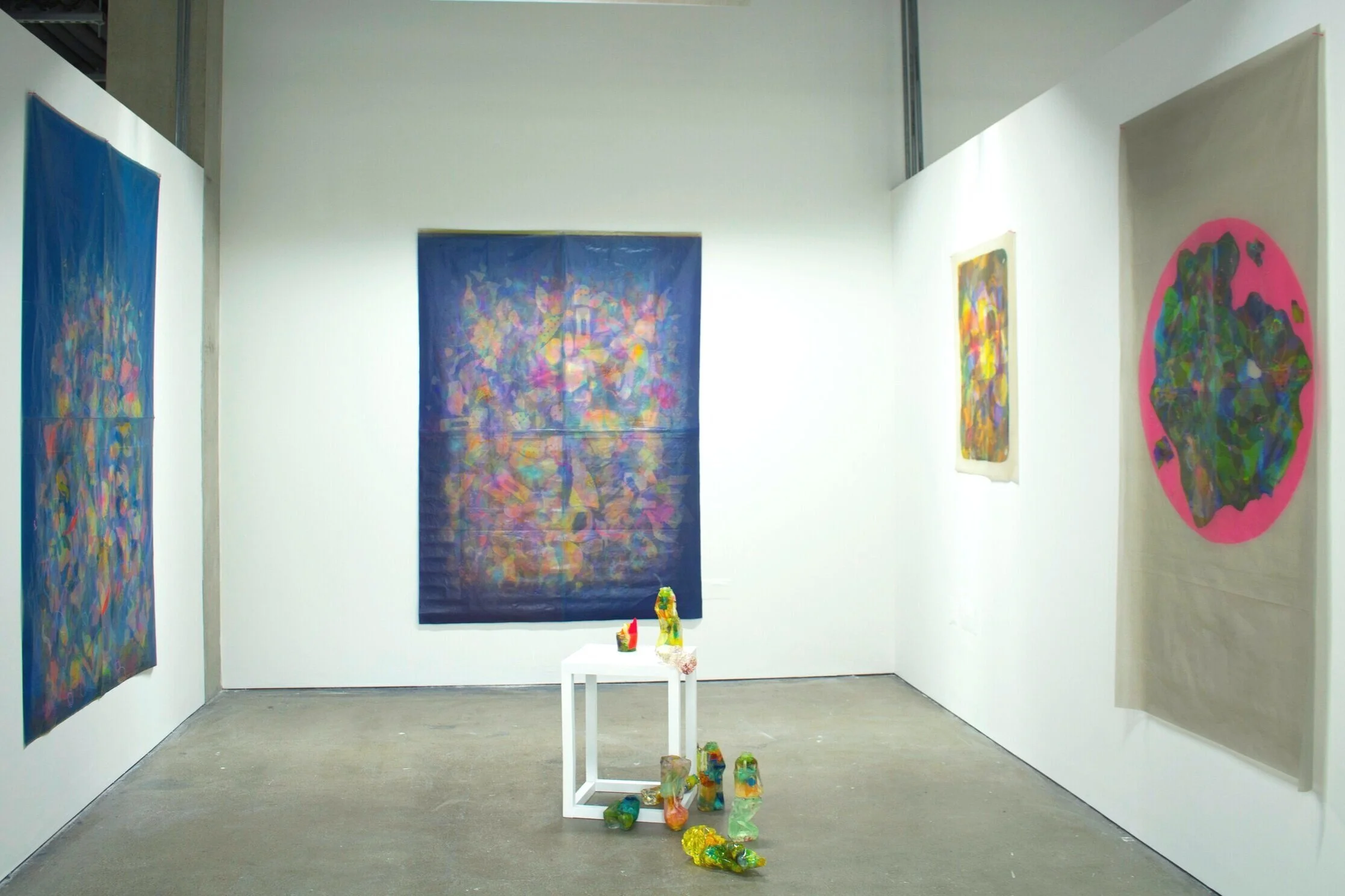
Fish Food, 2019
RCA, MFA Degree show
Offset Lithography on recycled plastic & resin and ink soaked plastic casts.
When I returned to Ireland, I think I made up for lost time with the natural world. I spent countless hours swimming and running through the mountains. I also realised then that my art practice needed to align more closely with my life — I didn’t want the two to exist as separate things.
Being immersed in nature, and physically moving through landscapes, was what made me feel most alive and connected. It was where things began to make sense.
My first solo exhibition, Collide, in 2021, became a significant turning point. It was the moment when I began to understand how to truly express myself through my work, and the work started to feel really like my own. I began painting during Covid and discovered that I absolutely loved it. Painting felt intuitive, freeing, and more expressive than printmaking. Print will always be my first love, but painting was what my practice needed at that moment — and continues to need now.
In the 13 years of my art career I feel that I have come full circle with my practice, having explored and experimented with many different mediums and materials. I have followed different conceptual paths and strands of interest, but ultimately, everything has brought me back to where I began. It didn’t need to be overly complicated. It simply needed to be true to me, make me feel excited about creating, and to create a feeling or connection for the viewer.
I began my journey as an artist interested in where I came from and what my ancestors left behind for me to discover. This remains at the heart of my work today, although it has evolved into something very different, it will always be about searching for a profound sense of place and belonging.
In my last newsletter, I introduced Boleycarrigeen, a Neolithic stone circle located behind our house here in West Wicklow. This is a place I have been visiting a lot since first discovering it. Originally composed of 20 stones, only 11 remain today. Interested in what the original circle may have looked like, and questioning what happened to the missing stones, I began thinking about ways of reimagining and reconstructing these lost elements. The rubbings shown below are the first attempt at this exploration. They were created through a slow and repetitive process of rubbing graphite onto Japanese paper placed over the remaining standing stones. This process, known as frottage, comes from the French word frotter, meaning “to rub”.
By gently tracing the surfaces of these stones, I sought to draw out some of the knowledge, stories, and histories they hold, having stood in this landscape for more than 5,000 years.
The circle that once held people for rituals, ceremonies, and gatherings is now incomplete. As an artist, I am interested in exploring ways of imagining it whole again. The rubbings are only the beginning of a larger body of work investigating this ancient circle and the traces it continues to leave behind. Hopefully in the next newsletter I will have further developments on this line of inquiry for you all.

Nine Stones, Boleycarrigeen 2026
Frottage on Japanese paper
Using our senses
David Hockney once said, “As an artist you are really just interpreting life.” What makes this so interesting is that everyone interprets life differently. We each experience the world through our own unique lens, shaped by our memories, emotions, and senses.
Artists often look closely at the world around them. They pay attention to small details and use all of their senses to understand and express what they are experiencing. Perhaps this sensitivity is one of the greatest gifts an artist can have, but it can also be challenging. We tend to absorb a lot from our surroundings, notice things that others might overlook, and sometimes think about them so deeply that we can become overwhelmed.
In many ways, it feels as though we have forgotten how to fully use our senses. In the fast-paced, digital world we live in, it is easy to become disconnected from the simple act of paying attention. Our brains often slip into “autopilot,” processing our surroundings passively rather than actively experiencing them. We rely heavily on technology to answer our questions instead of taking the time to observe, listen, and discover for ourselves.
This is something Manchán Magan explores in his book Listen to the Land Speak. He writes about how our ancestors experienced the world through a much more whole-bodied awareness — not just by looking at nature, but by listening, smelling, touching, and sensing. They understood changes in weather by paying attention to the land, observing animal behaviour and plant changes, and noticing subtle shifts in the air around them. His wider argument is that modern life has become overly dominated by the visual sense — through screens, images, and reading — and that we have lost some of the older ways of simply paying attention.
I know I can easily fall into overusing my visual sense, and this can sometimes leave me feeling anxious and overwhelmed. However, since moving to Wicklow, I have found myself engaging my senses much more. Every other morning, while our porridge cooks, my daughter and I go outside for a few minutes to listen to the birds and the sounds of the world waking up. I can confirm that it makes you feel alive.
To conclude, engaging our senses brings us back into a relationship with the world around us. It pulls us out of our thoughts and into the present moment, grounding us and reminding us that we are not separate from nature, but part of it.
Thin Places
I recently finished an incredible book by the Irish writer Kerri Ní Dochartaigh called Thin Places. It had been sitting on my bookshelf for the past few years, waiting for the right moment to be read. This beautiful book, although difficult to read at times, has really helped me understand the power of place and the meaning of a “thin place”. For a long time, the idea of thin places had slightly put me off using the term in my own practice. I had associated it with the idea of a veil between this world and another being lifted to see into another realm. However, Kerri’s writing offered me a different understanding. She also describes thin places as “spaces that make us feel something larger than ourselves, as though we are held in a place between worlds, beyond experience.” They are places where our worries begin to fade, our attention sharpens, and we feel lighter and more connected.
As part of my research, I have become increasingly interested in how certain places can evoke such powerful emotions — how they can make us feel grounded, connected, and sometimes as though they are quietly vibrating with energy. I had read about thin places before and was always a little sceptical about the idea. I do believe that certain places carry a particular energy and can feel very different from others, but I’m not sure I believe that this necessarily means we will see spirits, hear voices, or glimpse into another world.
I think everyone understands and experiences the idea of a thin place in their own way. Reading Kerri’s book helped me understand what a thin place means to me. It is a place where I become completely present and perhaps this is what I have been searching for through my work all along. Those moments when a place holds a memory, a feeling, or a story that reaches beyond ourselves.
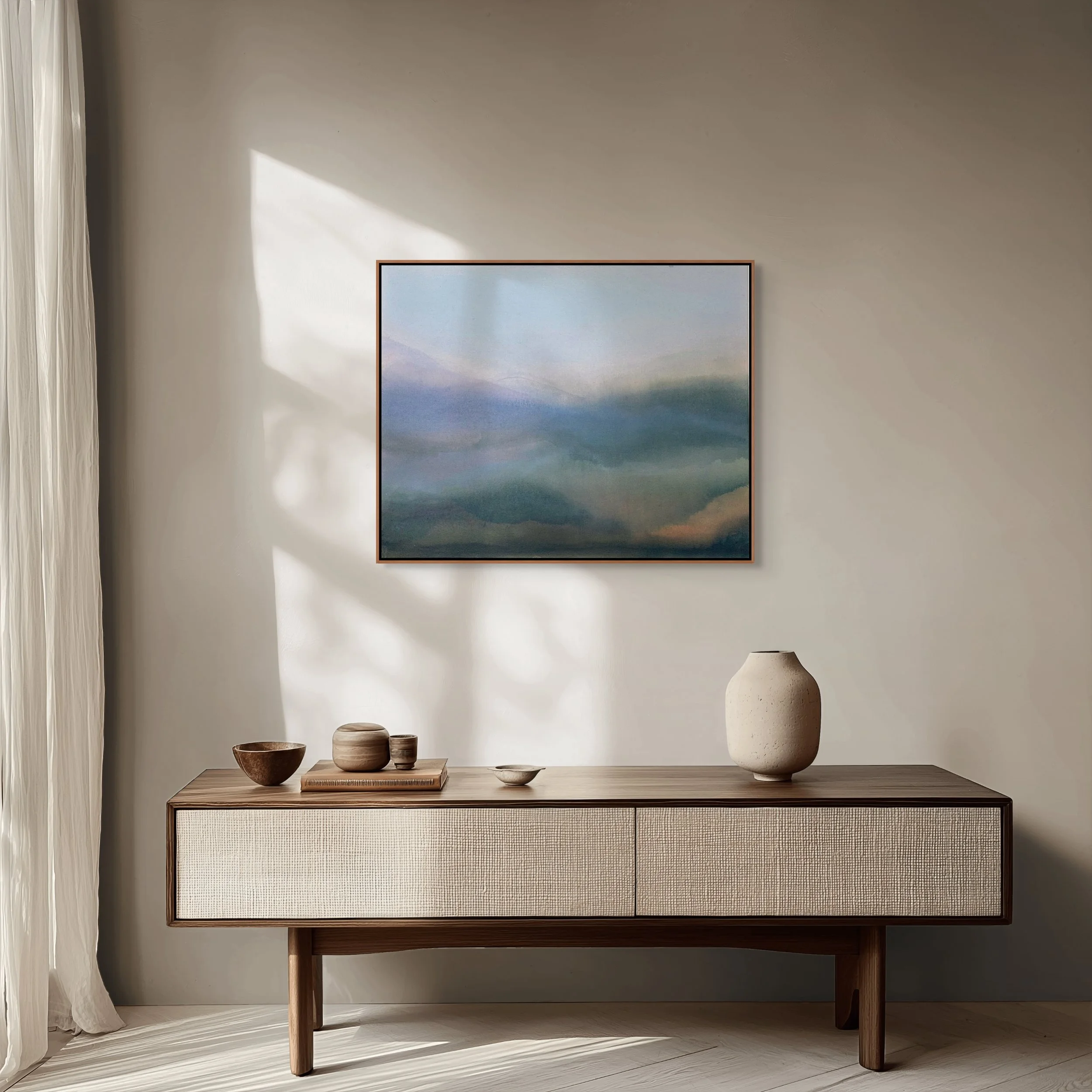
Thin Land, 2026
Acrylic and pastel on canvas
€2,300
The Art Riddler
I was delighted to have two pieces selected for this year’s Art Riddler exhibition, which took place last month at 1 Charlemont Square in Dublin.
When The Art Riddler first contacted me four years ago ahead of his first exhibition, I have to admit I was completely creeped out by this masked man. I promptly told him to leave me alone and stop sending me creepy videos (cringe!). Over the following four years, I watched curiously as the popularity of his exhibitions grew. After hearing him interviewed by Dermot Whelan, I finally understood what it was all about — and why he wore the mask. So, this year, I decided to enter.
The two paintings selected were Dust from a Moth’s Wing and Searching for Openings. Both were really well received, and it was the first big exhibition I had been part of since having my daughter, so it felt like a big deal. The event was a huge success, with hundreds of people attending across the opening nights, and The Riddler managed to sell over half of the work in the exhibition.
Having an exhibition like this in May, and seeing the excitement and energy it created, made me think of the Salon des Refusés — an alternative group exhibition for artists who had been rejected from the Salon de Paris, but in this case the RHA annual exhibition.
I think there is something really special about exhibitions that create opportunities for artists and remind us that there are many different paths for our work to find its place in the world.
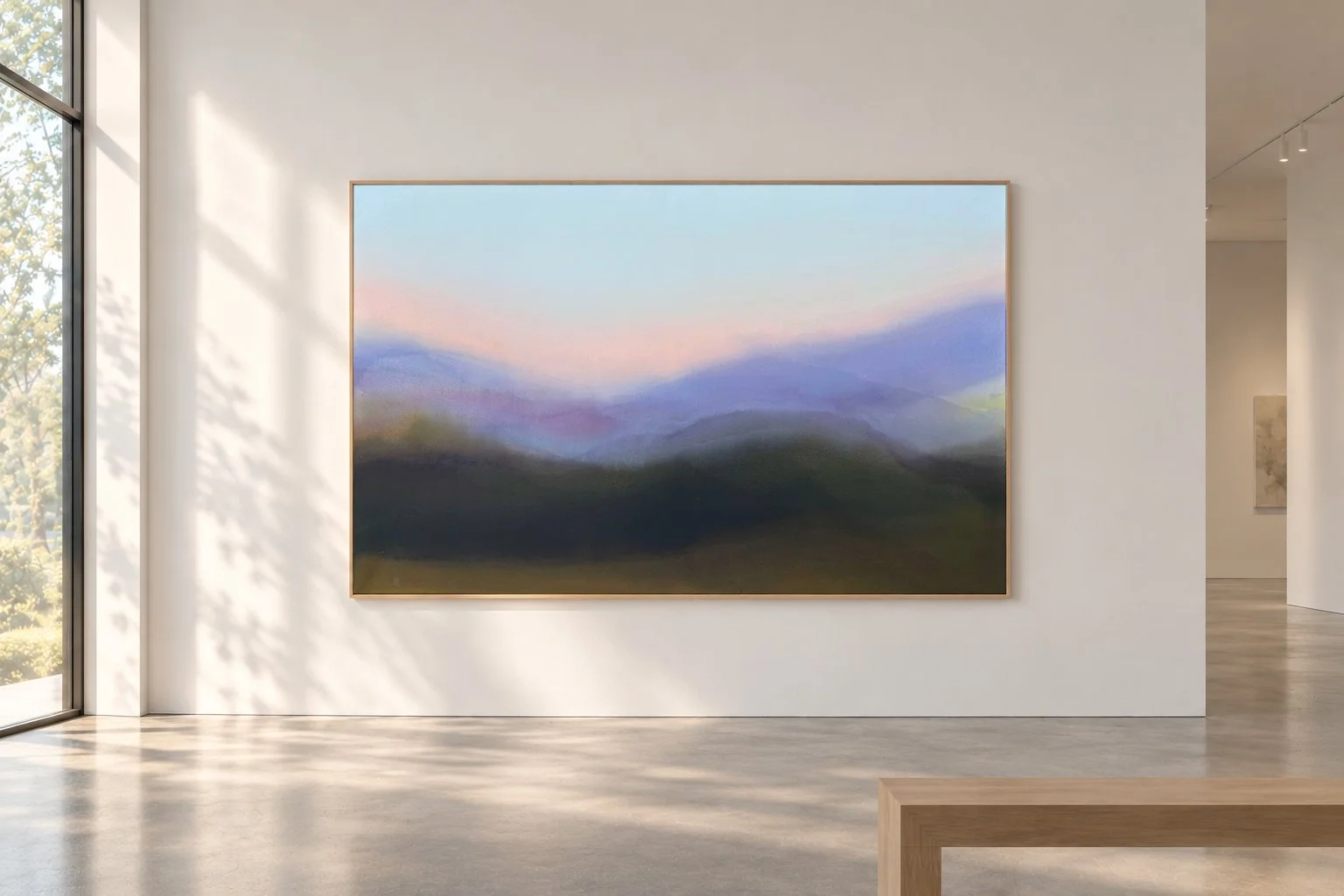
Dust from a Moth’s Wing, 2026
200w x 130h cm, Acrylic and pastel on canvas
€6,200
As I come to the end of this newsletter, I realise that although these reflections may seem like separate threads — they are all connected by the same thing: a search for connection and a deeper sense of belonging.
Perhaps this is what I have been trying to understand through my work all along — the relationship between ourselves and the places we inhabit. Whether through paint, print, or simply taking the time to just listen to the world around me, I am interested in those moments when I feel truly present and connected.
I hope this newsletter encourages you to slow down a little bit, pay attention, and notice the small moments of wonder that are quietly waiting to be found.
Thank you again for reading, it was a long one. I am so looking forward to sharing with you all again for Lughanasa in August.
with love and summers light,
Aoife x
